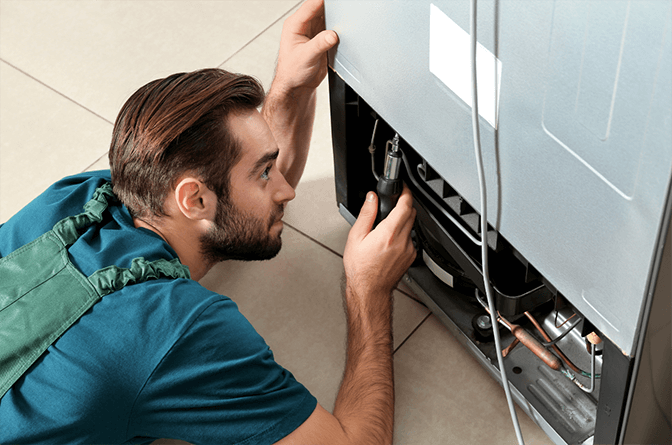
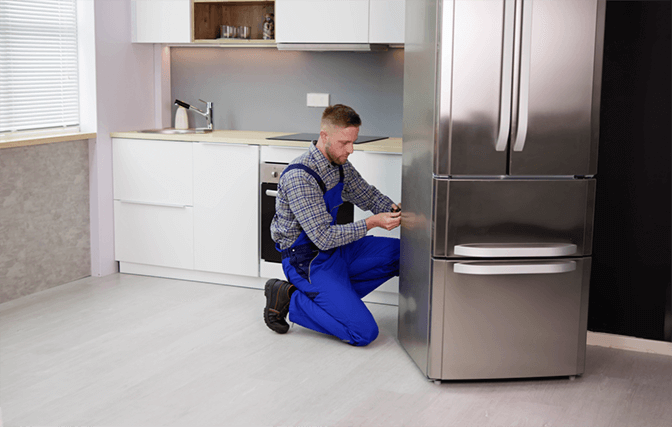
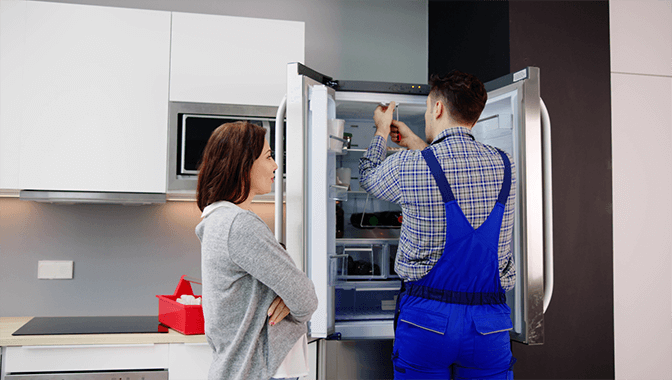
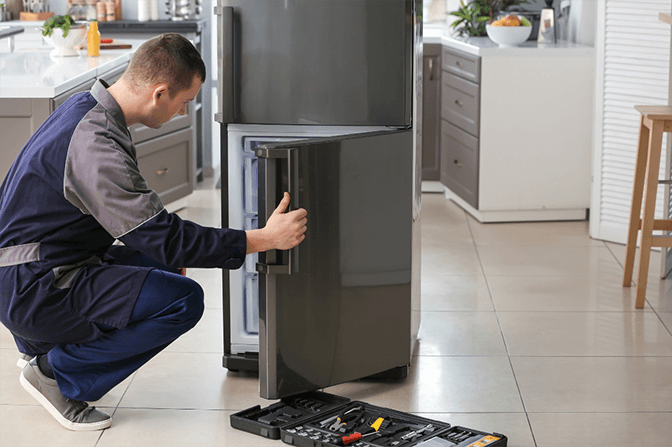
Not cooling properly, or making a noise it never used to? A technician who actually diagnoses the fault gets to you fast, most jobs fixed the same day.
Same-Day
Repair, Most Jobs
All Major
Brands
Fixed Price
Before We Start
You open the fridge and it's noticeably warmer than it should be, or there's a puddle forming underneath it, or it's making a clicking, humming, or buzzing sound that's new and a little unsettling.
A home refrigerator is one of those appliances you genuinely notice the moment it stops working properly. A slow leak, a compressor starting to struggle, a door seal that's lost its grip — none of these announce themselves loudly at first, but they all get worse the longer they're left.
Most people's instinct is to try a few things themselves first, and that's genuinely worth doing before calling anyone. But when it's something more than that, guessing further usually just delays the actual fix, and a repair done without proper diagnosis has a habit of coming back within weeks.
That's where The Cool Fixer comes in: a technician who diagnoses the actual fault before proposing anything, quotes a clear fixed price, and fixes it properly the first time.
We work on freestanding fridges, built-in and integrated units, side-by-side and French door configurations, and standalone freezer units — because the right diagnostic approach depends on the specific type of unit in front of us.

Ranges from something simple — a door not sealing, a blocked vent — to something needing a technician, like a refrigerant leak or failing compressor.
A louder hum, a repeating click, or a buzzing sound usually points to a component under stress and tends to worsen, not resolve on its own.
Usually a blocked or frozen condensate drain, sometimes a door seal letting in enough moisture to cause condensation.
Often linked to a door seal that's no longer sealing, or a defrost system fault.
A healthy compressor cycles on and off at a steady rhythm. One running non-stop is working harder than it should.
Sometimes a sign of a drainage issue trapping moisture somewhere inside the unit, out of easy reach.
Often points to a door seal problem or a defrost system fault, worth addressing before it affects overall cooling.
A fridge that's needed more than one or two repairs already is often approaching a repair-versus-replace conversation.
The most common household type, generally the most straightforward to access, though brand-specific component layouts still matter for correct diagnosis.
Fitted into kitchen cabinetry, needing careful handling during repair to avoid damaging surrounding joinery.
Larger capacity units with more complex seal arrangements and often water/ice dispensers with their own failure points.
Often shared in a household with a separate fridge — handled as part of the same visit where relevant.
Common in home offices and entertaining spaces — usually simpler, more affordable repairs once properly diagnosed.
A quick description or photo of what's happening.
Brand, approximate age, and whether it's the fridge side, freezer side, or both.
Same-day appointments available in most cases.
With diagnostic tools and commonly needed parts stocked on the van.
Compressor, refrigerant levels, thermostat, door seals, condensate drainage — not just the obvious symptom.
In plain language, before any repair work begins.
With the technician explaining what failed and why.
Confirmed to actually hold temperature, not just appear to work briefly.
If a full repair isn't the sensible option, we'll say so rather than let you find out later.
Useful for your own records, particularly for any existing warranty.
Often the most significant fault. A compressor that failed due to an electrical issue elsewhere will fail again if replaced without addressing the cause.
A slow leak shows up as gradually declining cooling. We locate the leak, repair it, and recharge properly — not just top up as a temporary fix.
One of the most common and affordable fixes — a seal that's lost its grip lets warm air in continuously, straining the compressor.
Sometimes the fridge is mechanically fine and the fault is a failing thermostat or board — a considerably simpler fix.
A very common cause of water pooling inside or underneath, straightforward once properly identified.
Both the evaporator and condenser fan can fail independently, each producing a different noise and airflow symptom.
A failing defrost heater, timer, or sensor causes ice buildup that eventually restricts cooling across the whole unit.
Sometimes the problem isn't the seal itself but a door no longer hanging correctly, preventing a proper seal.
Even unplugged, capacitors in some units can retain a charge. Not a place for a confident guess.
Needs specific equipment and certification. Without fixing the actual leak, the problem returns within weeks.
Usually an electrical fault — repeated resets risk making it worse.
Unplug immediately and call, regardless of whether it still seems to be running.
The temperature dial settings, whether the door is closing fully, whether vents inside are blocked by overpacked shelves, and whether the condenser coils are visibly caked in dust — these are safe, sensible checks that occasionally resolve the issue without needing a call-out at all.
Refrigerator repair gets lumped in with general handyman work more often than it should. A technician who genuinely specialises in refrigeration diagnoses differently than someone treating it as one more household fix on a long list of unrelated jobs.
What proper diagnosis looks like: testing the compressor's actual electrical draw rather than just listening to whether it's running, checking refrigerant pressure rather than assuming a leak based on symptoms alone, and testing thermostat switching behaviour rather than replacing it on a hunch.
Why this matters for your wallet, not just the fix: a misdiagnosed repair often means paying for a part that wasn't the problem, then paying again for the part that was — two invoices for what should have been one properly diagnosed visit.
One of the most common questions on ageing fridges, worth a straightforward answer rather than a sales pitch either way.
A rough rule of thumb: if the repair cost, multiplied roughly by the fridge's age in years, starts approaching what a comparable replacement would cost, replacement usually makes more sense. A modest seal or thermostat repair on a 3-year-old fridge is clearly worth doing. A significant compressor repair on a 12-year-old unit is a different conversation.
What matters beyond the math: how many times the fridge has already needed repair, whether parts for an older model are getting harder to source, and whether energy efficiency has visibly declined.
We'll tell you honestly either way — a repair that's the right call this time doesn't mean we'd recommend the same next time if failures continue, and a fridge past a sensible repair point doesn't mean every fault on it isn't worth fixing, if the issue is minor.
A door seal replacement and a compressor replacement are both "fridge repairs," but sit at very different price points.
Typical categories: seals and thermostats sit at the more affordable end. Fan motor and control board repairs sit in the middle. Compressor replacement and major refrigerant work sit higher, reflecting parts and labour.
A technician diagnoses the actual fault on site and gives you a clear price before any work begins. No surprise charges once the repair starts.
Call Now — Get a QuoteTell us before the visit — some repairs may need to go through an authorised channel to keep that warranty valid, and we'll advise honestly.
A written summary of the diagnosis and repair is useful documentation for a broader maintenance conversation about a rented property's appliance.
Covers the specific repair carried out, with details confirmed as part of your quote before work begins.
Using actual testing, not an educated guess based on the most common fault for a symptom.
No vague estimate that turns into a surprise number once the invoice arrives.
A failing fridge is rarely something a household can comfortably leave for days.
Based on your specific unit's condition and history, not a default push either way.
You're not left searching for a specialist because of what's written on the front of your fridge.
Unplug the unit immediately and mention this clearly when you call.
To a cooler bag or a neighbour's fridge, particularly if it's been warm more than an hour or two.
Place a towel down and move anything nearby that could be damaged.
Each opening lets warm air in and makes the actual problem slightly worse.
A power outage, an unusually hot day, a recent house move — this genuinely helps diagnosis.
⚠️ Placeholder cards — replace each with a real review before this page goes live.
Add a real review here — what happened, how fast, and the outcome.
Real name | Real area
Real date
Add a real review here — what happened, how fast, and the outcome.
Real name | Real area
Real date
Add a real review here — what happened, how fast, and the outcome.
Real name | Real area
Real date
Same-day in most cases. Call and describe what's happening, and we'll give you an honest estimate for your specific situation.
Yes, we work across common home refrigerator brands, including built-in and freestanding units. Mention your brand and age when you call.
Yes, worth addressing before it becomes a full breakdown. New noises typically mean a component under stress.
Depends on the unit's age, repair history, and cost of the current fault relative to replacement. We'll assess honestly.
A proper diagnosis using actual testing, a clear explanation, and a specific price before any work begins.
Yes, usually a blocked condensate drain or a door seal issue — both straightforward once identified.
We'll confirm this clearly when you call, along with what it covers.
Often a door seal issue or a defrost system fault specific to the freezer compartment.
Yes, a common reason people call us. We diagnose from scratch rather than assuming the previous conclusion was correct.
Yes — the temperature dial, whether the door closes fully, blocked vents, and dusty condenser coils are all safe first checks.
Yes, details depend on the specific repair — confirmed as part of your quote.
Dubai-wide. Call and we'll confirm coverage and an honest response estimate.
Both. Built-in units need extra care around cabinetry, but the diagnostic standard is the same.
A fridge working harder to hold temperature — a worn seal, dirty condenser, or failing component — draws more power, often an early sign of a developing fault.

Tell us what's happening and what type of equipment is involved. A technician who actually knows that system will get to work on fixing it properly, the first time.